
Miwa
Redefining trust in the water-drinking experience.
A strategic logic for growing a mineral-water brand — from understanding the everyday experience and the reality of retail to a path that turns the brand from a bottle on a shelf into a trusted part of daily life.
The hidden problem behind a bottle of water.
Mineral water usually enters life at the moment someone is away from the familiar water at home: on the road, at work, after exercise, travelling, or in the middle of a hot day. In those moments water isn't just an answer to thirst — it has to be near, accessible, pleasant to drink, and above all trustworthy.
On the surface, mineral water is a simple product. But trust in water doesn't depend only on the liquid inside the bottle; warm water, a bottle left in the sun, poor storage, or a clunky buying experience can all cast doubt on the claimed quality. Miwa's problem was how to build a trustworthy, accessible, repeatable experience at the moment of need.
The Donoghteh approach: intervention designed from the field.
This project didn't begin with ideation detached from the reality of consumption. We first got close to the consumer's everyday experience, then saw the reality of retail supply, analysed the tensions and counter-narratives at play, and only then shaped the design directions.
The path was: listen to the consumption experience, understand the reality of supply, extract shared patterns, reframe the brand problem, and design a course of action. This approach kept the project from staying a mere diagnostic report and turned it into a framework for decision-making, experience design, and brand development.
Trust in water is a chain.
- The chain of trust runs from the water's source and packaging through transport, storage, point of sale, and the moment of drinking — and every link can strengthen or damage trust.
- The consumer doesn't always see the whole path; they judge from visible signals like temperature, cleanliness, orderly display, and the feel of the bottle.
- For the home, a child, or a sensitive body, choosing water shifts from a quick purchase to an act of care.
- Plastic isn't a barrier to purchase, but after consumption it becomes an important issue; responsible behaviour forms when it's simple, close, and transparent.
The horizon the project built for Miwa.
The output was a fresh framing of the brand's path: how Miwa can move from a bottle of water on a shelf to a trusted experience in everyday life. This horizon lifts the brand from the level of "product" to the level of "experience."
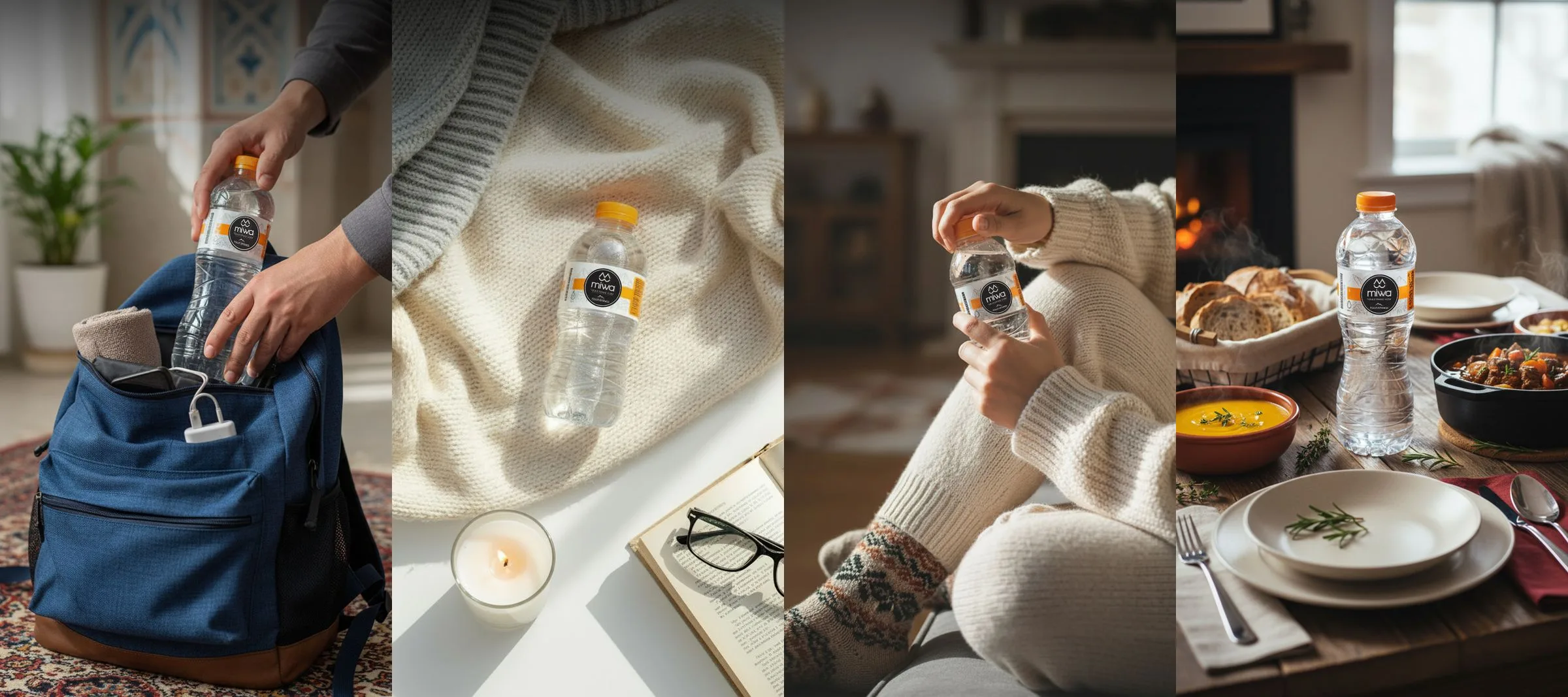
Along this path, Miwa can become meaningful in movement and on the road, at work, sport, and travel, at home and with family, in the moment of urgent need, in conscious choice, and in responsible behaviour after consumption.
The directions the field opened for the brand.
Trust at the point of choice
The brand shouldn't only talk about quality; it must create conditions where quality and reassurance are visible at the moment of choice. Point of sale, how the product is displayed, the seller's role, and the clarity of the brand message all shape this experience.
Fit with real consumption moments
Drinking water on the road, at exercise, at work, travelling, and at home is not the same. Rather than one generic answer, brand design has to understand the logic of each consumption situation.
Presence at the moment of need
The brand isn't only present on the shelf; it has to be experienceable in the flow of everyday life, on the routes and in the moments where speed, access, and reassurance matter.
Family and care
When water is chosen for the home, a child, or a sensitive body, the consumer is more attuned to signals of trust. Miwa can also come to mean something in caring and family situations.
Post-consumption responsibility
Post-consumption responsibility was seen not as an advertising message but as part of the brand experience — one that has to be supported by real infrastructure, a clear narrative, and the possibility of everyday participation.
From a bottle of water on a shelf to a trusted experience in everyday life.
The project's main achievement was designing a strategic logic for the brand's growth — a logic showing that to become a memorable choice, Miwa must work at once on trust, access, consumption situation, buying experience, and post-consumption responsibility.
Put simply, the project helped Miwa's problem move beyond "how do we sell more water" to a better question: how do we build an experience that makes the consumer remember and trust the name Miwa at the moment of need?